The Origins: 800 Years of History
The Ati-Atihan Festival's roots stretch back to 1212 AD, making it one of the world's oldest continuous celebrations. The story begins when a group of 10 Malay chieftains called "Datus," fleeing conflict on the island of Borneo, sailed to Panay Island seeking refuge. The indigenous Ati people--the island's original inhabitants--granted these newcomers settlement rights in exchange for friendship and mutual benefit. This exchange of generosity became the foundation for a yearly celebration of friendship and gratitude.
The festival was originally an animist celebration honoring the "anito" (ancestor spirits) of the Ati people. When Spanish missionaries arrived in the 1600s and began converting the population to Catholicism, they did not erase the existing festival. Instead, they reframed it. The annual celebration was rededicated to the Santo Niño (Holy Child Jesus), creating a syncretic tradition that blended indigenous veneration with Catholic devotion. This cultural blending--rather than replacement--is crucial to understanding the Ati-Atihan's power. The festival continued for centuries, officially renamed "Ati-Atihan" in 1972, meaning "to imitate the Ati people."
Syncretism in Action: Indigenous + Catholic Faith
The Ati-Atihan exemplifies religious syncretism--the blending of two spiritual traditions into something new. Rather than indigenous spirituality being erased by colonization, it was preserved through reframing. The celebration of the Ati people and their spirits continues today, now expressed through devotion to the Santo Niño. This layered approach to spirituality is characteristic of Filipino culture: respectful of ancestry, open to new influences, and capable of holding multiple meanings simultaneously.
Why It Matters: Cultural Significance
The Ati-Atihan holds deep significance in Philippine culture for several reasons. First, it is recognized as the "Mother of All Philippine Festivals"--the festival that inspired later celebrations like the Dinagyang of Iloilo and the Sinulog of Cebu. The Ati-Atihan came first and served as a template for how communities could blend indigenous traditions with Catholic observance. Second, it represents cultural memory and historical continuity. In a nation that experienced centuries of colonization, the Ati-Atihan preserves indigenous identity and remembers the pre-colonial peoples who first inhabited the islands. The festival says: we were here, we matter, and our traditions endure.
Third, the Ati-Atihan demonstrates Filipino values of community, hospitality, and celebration. The original story--of the Datus and Ati people exchanging friendship--remains the festival's moral center. In contemporary Philippines, the festival unites communities across class, region, and profession in shared celebration. The festival's inclusion in the Philippine national inventory of intangible cultural heritage--published in 2012 by the NCCA with UNESCO's ICHCAP--affirms its cultural importance. The Ati-Atihan is not just entertainment; it is a national cultural treasure.
The Festival Celebration: What to Expect
The Ati-Atihan festival typically runs for a full week (January 10-18 in 2026), with the main street parade occurring on the third Sunday of January. The celebration is centered in Kalibo, the capital of Aklan province, located in the Visayas region of the Philippines (about 2-3 hours from Boracay Island by ferry).
The Street Parade ("Sadsad")
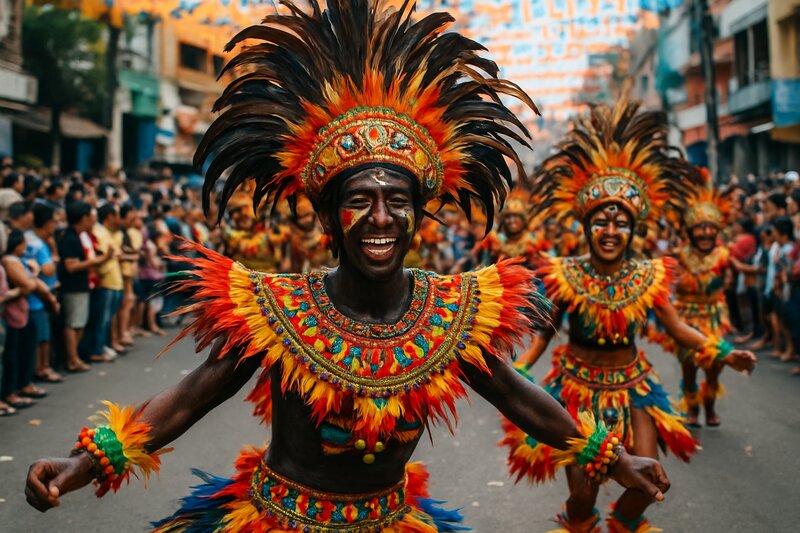
The centerpiece of the Ati-Atihan is the grand street parade, known as "Sadsad" (the local word for the distinctive foot-dragging dance style). Thousands of dancers wearing elaborate costumes participate in the parade, which winds through Kalibo's streets. The visual spectacle is extraordinary: participants wear tribal-inspired costumes with feathered headdresses, elaborate beadwork, face and body paint in vibrant colors (reds, yellows, blues, greens), and layered costumes that reference indigenous Philippine clothing. Unlike formal parades, the Sadsad is participatory--spectators are encouraged to join the dancing and celebration. The parade is accompanied by marching bands playing traditional Philippine music, amplified through the streets, creating an immersive sensory experience.
Religious Processions
Alongside the secular street party, the festival includes formal religious processions honoring the Santo Niño. These processions are more solemn than the street parade, featuring the Santo Niño statue carried through town in a decorated platform (palanquin), accompanied by devout followers. The contrast between the exuberant street celebration and the reverent religious procession reflects the festival's dual nature--honoring both cultural traditions and spiritual devotion.
Street Food, Markets & Community Gatherings
Beyond the formal events, the festival creates an atmosphere of communal celebration. Streets close to vehicular traffic, transformed into pedestrian zones where food vendors sell traditional Aklan cuisine--grilled meats, sticky rice cakes, coconut-based desserts, and local delicacies. Small stages throughout town host live music and cultural performances. The festival becomes a multi-day celebration where locals and visitors mingle in the streets, experiencing Kalibo's culture and hospitality.
Planning Your Visit: 2026 Dates & Logistics
Dates
Festival Dates: January 10-18, 2026 Grand Finale/Main Parade: Sunday, January 18, 2026
The entire week features celebrations, but the main street parade happens on the final Sunday. If you can only attend one day, make it January 18. That said, attending earlier in the week offers a less crowded experience while still capturing much of the festival atmosphere.
Getting There
From Manila: Kalibo is located in Aklan province in the Western Visayas. The most convenient route is flying from Manila to Kalibo International Airport (KLO) via Cebu Pacific, Philippine Airlines, or other carriers (approximately 1-2 hour flight). Alternatively, you can fly to Cebu and take an overnight ferry to Iloilo, then drive 3-4 hours to Kalibo, though this is more time-consuming.
From Boracay: If you're already in Boracay (a popular tourist destination nearby), Kalibo is 2-3 hours away by land transport and ferry.
Ground Transportation: In Kalibo during the festival, expect crowded roads and full taxis. Consider booking accommodations in advance and arranging transportation with your hotel.
Where to Stay
Book accommodations well in advance--during the festival, hotels in Kalibo fill quickly. Options range from budget hotels to mid-range establishments. Popular choices include hotels within walking distance of the parade route. Alternatively, consider staying in Boracay and taking day trips to Kalibo, though this adds travel time. Some visitors base themselves in Iloilo (a larger city about 1.5 hours away) for more accommodation options.
What to Bring & What to Expect
Weather: January in Aklan is dry season, so expect warm, sunny weather (25-30°C / 77-86°F). Bring sunscreen, a hat, and light clothing. Rain is less likely but possible.
Crowds: The festival attracts thousands of participants and spectators. Expect extremely crowded streets, especially on January 18. Arrive early to secure good viewing positions for the main parade.
Physical Demands: The celebration involves hours of standing and walking through crowded streets. Wear comfortable walking shoes.
Respectful Participation: The festival blends cultural celebration with spiritual devotion. While participation is encouraged, approach indigenous cultural references with respect. The costumes and face paint reference indigenous traditions, not mockery. Engage respectfully and follow local guidance on appropriate participation.
Money: Bring cash. Not all street vendors accept cards, and ATMs may have limited availability during the festival rush.
The Broader Festival Family
The Ati-Atihan inspired similar festivals throughout the Philippines. The Dinagyang Festival (celebrated in nearby Iloilo) and the Sinulog Festival (celebrated in Cebu) follow the Ati-Atihan template but with local variations. If you're visiting the Visayas region during January, you might experience multiple festivals. The Ati-Atihan remains the original and largest, drawing the biggest crowds and preserving the most direct link to pre-colonial traditions.
A Living Tradition: Why the Ati-Atihan Endures
In an age when indigenous traditions worldwide face pressure from modernization and globalization, the Ati-Atihan persists as a vibrant, evolving celebration. It endures because it serves multiple functions simultaneously: it honors indigenous heritage, expresses spiritual devotion, celebrates community identity, attracts tourism revenue, and provides joy. The festival demonstrates how traditions can evolve (from pre-colonial animist celebration to syncretic Catholic-indigenous observance to modern street festival) while retaining core meaning. The story of the Datus and Ati people--a narrative of exchange, friendship, and mutual respect--remains resonant in contemporary Philippines. The Ati-Atihan continues because Filipinos continue to find meaning in it.
Experiencing the Ati-Atihan Respectfully
- Recognize the festival's dual significance (indigenous heritage + Catholic devotion).
- Respect indigenous cultural references rather than treating them as costumes.
- Participate in the street celebration when welcomed by locals, but be mindful of sacred religious processions.
- Support local vendors and communities.
- Take photos but remain present to the experience rather than solely documenting it.
- Learn the festival's history before attending--understanding context deepens appreciation.